
Product line · PP Polypropylene

PP Polypropylene

Homopolymer, random copolymer and impact copolymer grades — stiff, heat resistant and suited to injection moulding, raffia, extrusion and thin-wall parts.

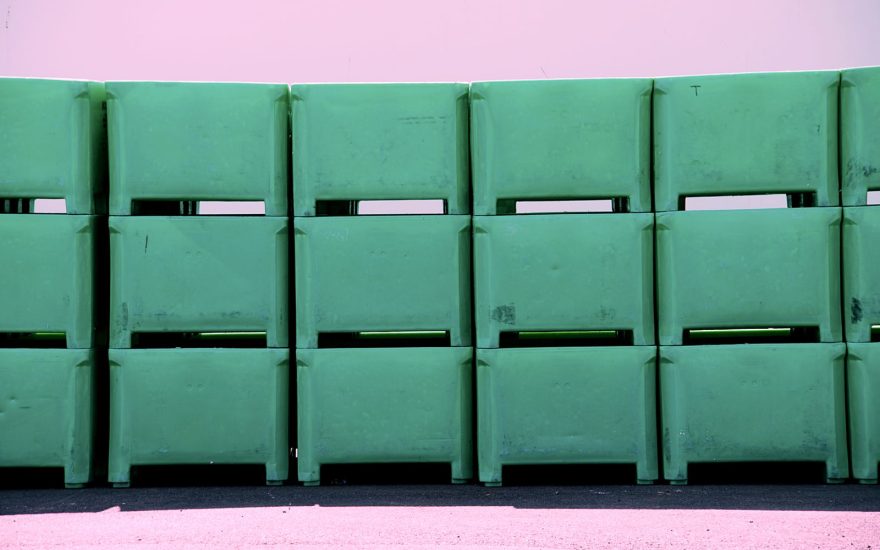
PP crates and injection-moulded parts

About this material

Polypropylene is one of the highest-volume commodity plastics. It is supplied in three structures: homopolymer, which gives stiffness and heat resistance at low cost; random copolymer, where ethylene units improve clarity; and impact copolymer, which disperses an EPR phase through the matrix to add low-temperature toughness without giving up rigidity. PP has low density, good chemical resistance and a wide processing window, which suits high-volume structural parts, containers and housewares with stable supply and cost.

Typical applications

Automotive and appliance structural parts, crates and logistics containers, woven bag tape and strapping, housewares and closures, thin-wall containers and clear storage items.

  • Fix the structure first:homopolymer for stiffness and cost, random copolymer where clarity matters, impact copolymer where low-temperature toughness is needed — choose by how the part is loaded and how it must look.
  • Match MFR to the process:low flow (around 3 g/10min) for raffia, extrusion and blow moulding, medium flow for standard injection, high flow (20 g/10min and above) for thin-wall moulding.
  • Shrinkage and warpage:PP shrinks noticeably (roughly 1.0–2.5%), so tight-tolerance parts need shrinkage allowed for and confirmed on a trial moulding; glass-filled grades shrink anisotropically.
  • Heat and weathering:PP takes heat better than PE and can carry warm-service parts, but weathering is average — long-term outdoor use needs a stabilised grade.
  • Compliance and appearance:food-contact, medical or long-term outdoor use should be declared up front, so the grade and the test documents can be matched to it.
Specification · Grades compared

Common grades compared

The table below compares common PP Polypropylene grades as a reference for selection and initial discussion.

← Swipe to see all columns →

GradeMFR (g/10min)Density (g/cm³)FeaturesTypical applications
K8003approx. 3approx. 0.90PP impact copolymer, balanced stiffness and low-temperature toughnessAutomotive structural parts, appliance parts, crates
EPS30Rapprox. 2approx. 0.90PP impact copolymer, strong impact performanceAutomotive parts, toolboxes, logistics containers
T30Sapprox. 3.5approx. 0.90PP homopolymer, raffia gradeWoven bag tape, strapping, rope
V30Gapprox. 16approx. 0.90PP homopolymer, injection gradeHousewares, crates, bottle caps
Z30Sapprox. 25approx. 0.90PP homopolymer, high flowThin-wall moulding, household goods, disposable containers
M1600approx. 14approx. 0.905PP random copolymer, good clarityClear storage boxes, clear containers, packaging

MFR shown at 230 °C / 2.16 kg for PP. Values are indicative only and are not specification limits; equivalent grades from other producers can be quoted. Technical documents available on request.

Applications

Related industries

See the solutions pages for each industry's selection priorities and compliance needs.

Need a quote or sample of PP Polypropylene?

Send the grade, colour and monthly volume — we reply within one working day with price, stock and lead time.

Request a quote